For those who were unable to attend….
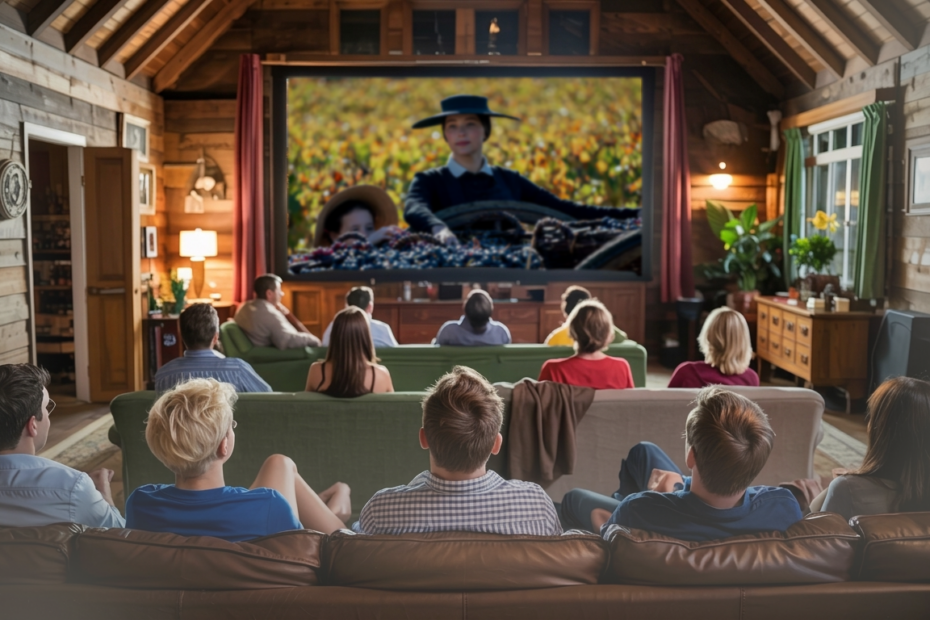
We welcomed the evening with a lovely sparkling – Blanquette de Limoux (Cuvée Françoise) and kept our appetites at bay with Truffle Salt Chips – a surprisingly good choice…. Just until we were all gathered and situated in the “theatre”
For those unfamiliar with the drill – From time to time we pause the film so we can freshen our glasses with the associated wine and refill our plates. This year there won’t be any:
- Commenting on the plot,
- Lecturing on the méthode champenoise
- Providing dry details of the Widow Clicquot’s life — you can all find that on Wikipedia.
Instead, you will be introduced to the Champagne Widows of France – Madame Clicquot being the first and most famous…… but she was by no means alone.
These women were pretty feisty, clever and driven….. But you may not know that they didn’t just make wine; they were innovators, marketing geniuses and they shaped many of the attitudes and traditions we take for granted today. Female mavericks in a time when it was difficult to be so.
Madame Clicquot was born 1777, Reims, France and died in 1866, a good long life to be sure.Smack in the middle of this, 1804, the Napoleonic Code was established. Legally, women were minors— under the control of their fathers, then their husbands. This was not the case regarding widows. If a widow had means, she could now control those means
That control was seductive enough for Madame Clicquot to live the ripe age of 89 and never remarry.
She was innovative… famous for inventing riddling, but she passed her independent spirit down through her daughter, her granddaughter Clementine, and even to her great-granddaughter, Anne de Rochechouart-Mortemart as we will see later.
Madame Clicquot was not alone There were many Champagne Widows’. But Let’s start the film.”
Break 1 – around 18:50 …. She ties the ribbon around the neck of the bottle. This ribbon on the bottle was such a successful marketing technique, G.H. Mumm – long in business introduced “Le cordon rouge”. Of course it’s said in marketing marketing materials that it represents the superior quality their champagne – paying homage to France’s highest military honour but really they didn’t think to do thus until 1876. Perhaps they were copying the marketing savoir-faire of the widows Perhaps not? It was so long ago who can say?
New Wine – Drappier (Zero Dosage Brut Nature)
Served with: Shrimp Cocktail
The widow Barbe-Nicole Clicquot was not alone.
Behold …. a few more Champagne widows
Louise Pommery (Champagne Pommery): In 1860, she took the reins. She is credited with creating Brut (dry) Champagne to satisfy the English palate, a move that would eventually dominate the world market.
Mathilde Émilie Laurent-Perrier: She ran Laurent-Perrier in the late 19th century, growing it into a powerhouse. Her best vintages were dubbed Veuve Laurent-Perrier.
These women capitalized on their mystique as widows. Women operating businesses? Successfully? How provocative! How radical! How lucrative! Other champagne houses noted this marketing success dubbing some of their vintages “Veuve” capitalize on this – despite there often was no widow involved!
Veuve Binet & Co: A notable 19th-century house that used the “Veuve” title to mimic the branding success of Veuve Clicquot.
Veuve Loche: Another early competitor that adopted the “Veuve” title to gain market clout.
Veuve Godard et Fils: A house created during this era to adopt the “widow” marketing strategy.
Even Veuve Amiot! – While Elsa Amiot was a real person who founded this Saumur (Loire Valley) house in 1884, – Veuve Clicquot was already a global icon. Using “Veuve” in the name allowed her smaller, non-Champagne sparkling wine house to immediately signal to consumers that her wine was made in the same serious, style as the expensive bottles from Reims. She even utilized their marketing techniques, sporting a distinctive purple ribbon on the neck of her bottles.
Veuve Monnier: This brand was notorious for its labeling. In the late 1800s, they produced bottles with a distinctive orange-yellow label that looked suspiciously similar to Veuve Clicquot’s famous “Yellow Label” (which Clicquot had trademarked in 1877). It led to several legal “discussions” about brand confusion!
Veuve Pelletier: This is a brand you’ll still see today in some markets (like Australia). It’s essentially a “private label” or “buyer’s own brand” that uses the “Veuve” name because it sounds prestigious and traditional, even though there isn’t a single famous widow behind the modern production.
Break 2 – around 47:16 things aren’t looking good!
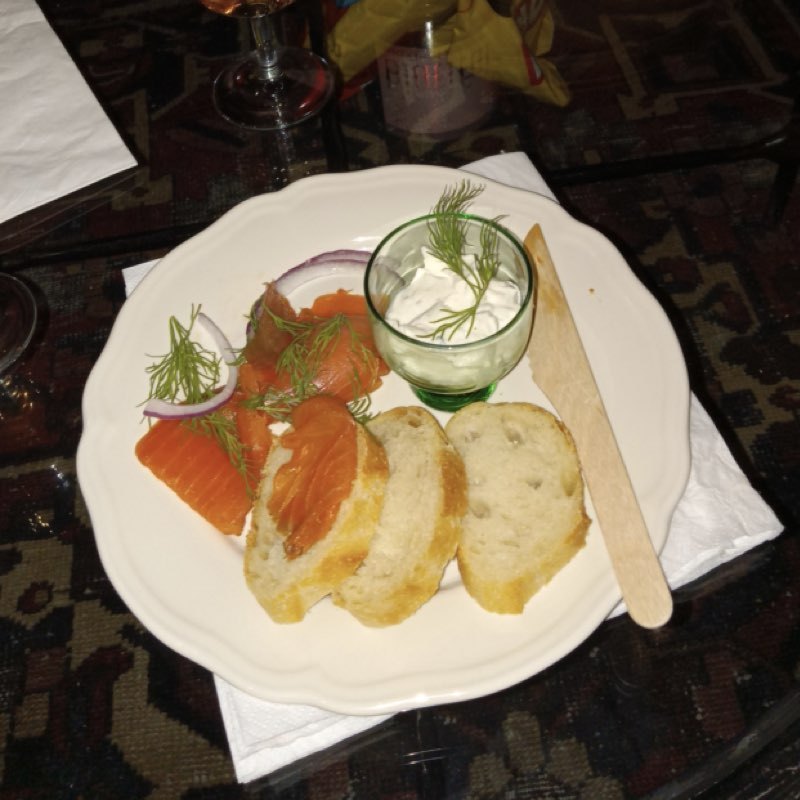
Biutiful Cava (Rosé)
Served with: Smoked Salmon, cheese, baguette etc.
Were these champagne widows feminists? How could they not be….Remember Anne, the great-great granddaughter of Madame Clicquot?
She was a founding member of the French feminist group L’Avant-Courrière. Anne de Rochechouart de Mortemart, was a French aristocrat, sculptor, and philanthropist known for championing women’s rights and independence. She supported suffrage, founded the Automobile Club féminin in 1926, and was the first woman to get a driver’s license (1898) and a speeding ticket.
But perhaps building enterprises and too busy to march… like these widows:
Veuve Devaux (Champagne Devaux) – Founded in the mid-1800s, this house was actually run by three successive widows. The most famous, Augusta Devaux, took over in 1879 and was a massive force in the export market. Unlike the “copy-cats,” this was a truly female-led dynasty that gave Clicquot a run for her money in terms of operational grit.
Veuve Fourny & Fils: – This is a premier cru house in Vertus. The “Veuve” in the name refers to Albertine Fourny, who took over the estate in the early 20th century. They are a great example of a smaller, family-run house that kept the “Widow” name as a mark of quality and resilience.
Veuve Lannier:
A smaller house that emerged in the late 19th century. They leaned heavily into the “tradition of the widow” marketing to establish trust with consumers in the UK and Belgium, who by then associated the word “Veuve” with “expertly crafted.”
Break 3 – around 1:06 war is over, no damage done to the vineyards. Woo-hoo
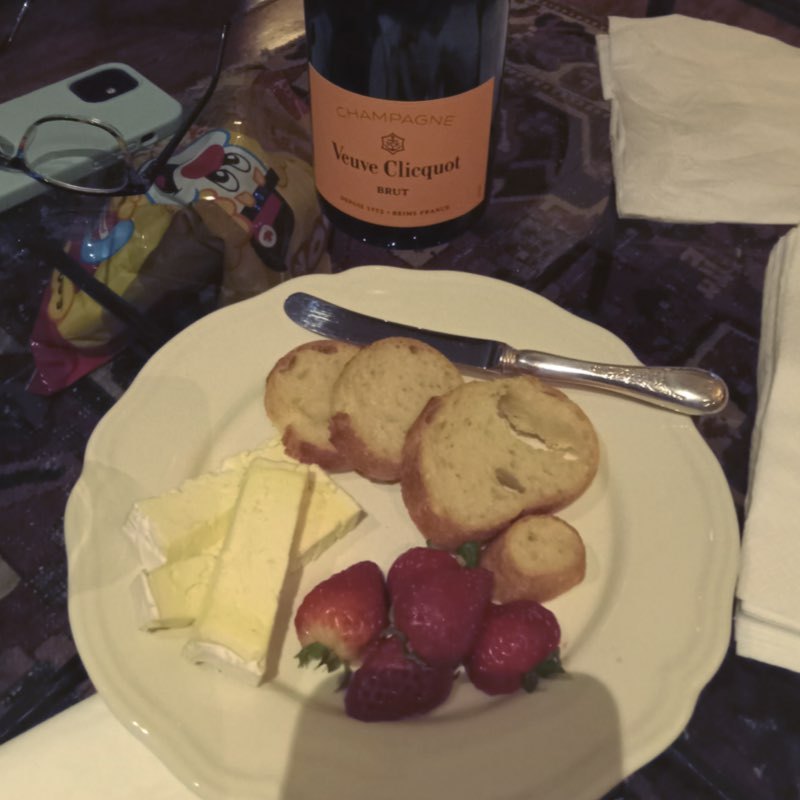
New Wine – Veuve Clicquot (Yellow Label)
Served with: Cheese, Délice de Bourgogne, strawberries and baguette.
Now we’re into middle of the 1900’s. 1938 brought in a change in French law…..women could own a business….. with their husband’s consent. And, they could not enter a contract without their husbands co-signing….. After over a century, Its still better to be a widow.
Break 4 – around 1:15 the trial…they try to wrestle the vineyard from her
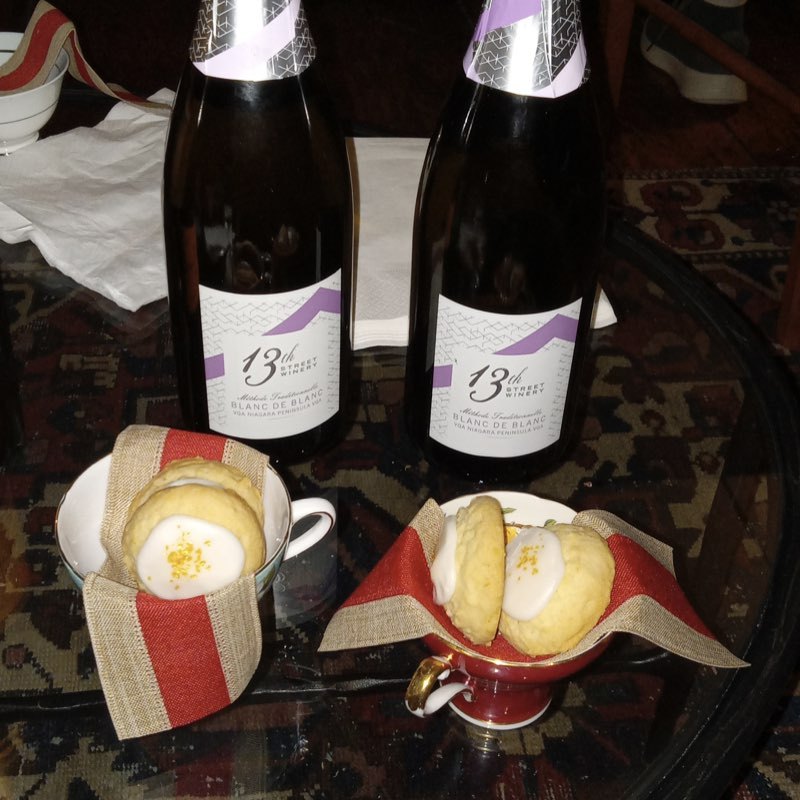
Segura Viudas Heredad –
Served with: Lemon Shortbread and berries
Two more champagne widows
Lily Bollinger: She took over in 1941. She famously guided the house through the German occupation (often sleeping in the cellars) and later created the innovative R.D. (Recently Disgorged) style. Her tireless promotion led to the renewal of the Royal Warrant by King George VI in 1950, solidifying Bollinger’s status with the British Royal Family.
Camille Olry-Roederer: Taking over Louis Roederer in 1932, she was the marketing genius who commercially launched Cristal (originally a private reserve for the Russian Tsar) to the public. In the 1950s, she positioned it as the ultimate “prestige cuvée” for the jet set, horse racing, and high society—a “status” bottle that remains iconic to this day.
Marketing? Formula 1 – it’s 1950, and the first-ever Formula 1 World Championship series includes the 1950 French Grand Prix. Where was it held? Reims. —the heart of Champagne.- By the way…. The birthplace of The widow Clicquot. Who would possibly consider this a coincidence? Why else do we associate champagne with success and status. victory and pride?
Moët & Chandon is most closely associated with F1 – Moët & Chandon was the bottle given to Juan Manuel Fangio the winner of that historic Reims race. Moet and Chandon was the major sponsor of F1 for years.
1965 – Finally….. Single and married French women achieve economic parity with widows.
And yet, the legacy created by these women is so great that even modern brands emulate the “veuve mystique”. So here are a few more brands that benefited from the veuve mystique:
Veuve Du Vernay – no widowThis is the most prominent example of a “Veuve” name used purely for branding.
• The Reality: The brand was actually created in the 1960s by Robert Charmat, the son of the scientist who invented the “Charmat Method” (used for Prosecco).
• The Marketing: There was no “Widow Du Vernay” running the company. Robert named the wine after a widow in the village of Vernay who had supposedly helped his father during his early research.
Veuve Emille – Its just a brand name- of Alliance Champagne
One final note ….. despite the close association of Moet and Chandon and F1 racing, for some reason the sponsorship was let lapse for 20 years.
However, once Sibylle Scherer took the reins of Moet et Chandon in 2023 (part of the LVMH conglomerate) and Moet is back in the F1 driver’s seat as of 2025
It just took a woman.
Event Flow & Pairings
Arrival & Welcome
- Greeting: Guests arrive (Coats & boots collection).
- Starter: Blanquette de Limoux served with Farm Boy Truffle & Sea Salt Chips.
- Theme Introduction: Start movie welcome and “Champagne Widows” theme.
- Pairing 1: Blanquette de Limoux —)
First Break: Seafood
- Menu: Jumbo Shrimp with Cocktail Sauce (from Fortinos).
- Details: 22 shot glasses on saucers (located on tray in garage).
- Pairing 2: Drappier Brut Nature —
Second Break: Smoked Salmon
- Menu: Smoked Salmon on thin baguette slices with capers, crème fraîche, and dill.
- Service: 22 saké glasses, white plates, dill and capers served on the side.
- Pairing 3: Biutiful Cava Rosé — )
Third Break: Cheese Course
- Menu: Délice de Bourgogne Farmhouse Cheese (approx. $7.95/100g), thinly sliced baguette, and strawberries.
- Service: Small plates and saucers (from Mum’s tea set).
- Pairing 4: Veuve Clicquot — )
Fourth Break: Dessert
- Menu: Lemon Shortbread (2 per teacup).
- Pairing 5: 13th Street Blanc de Blancs —)